Naiviivi
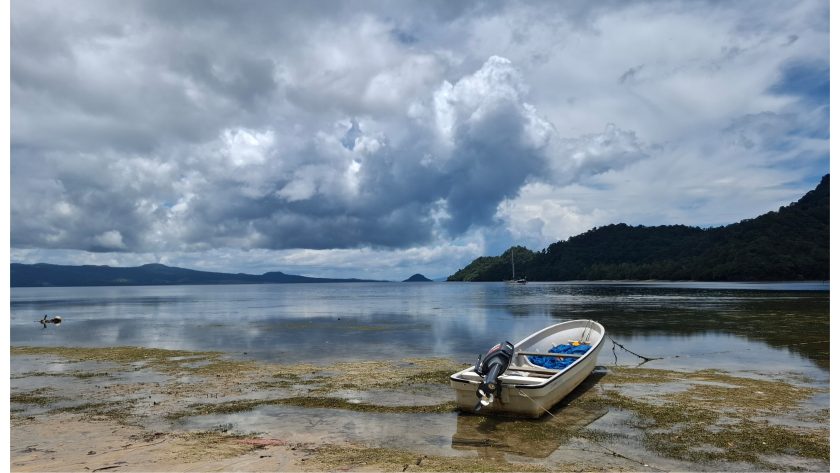
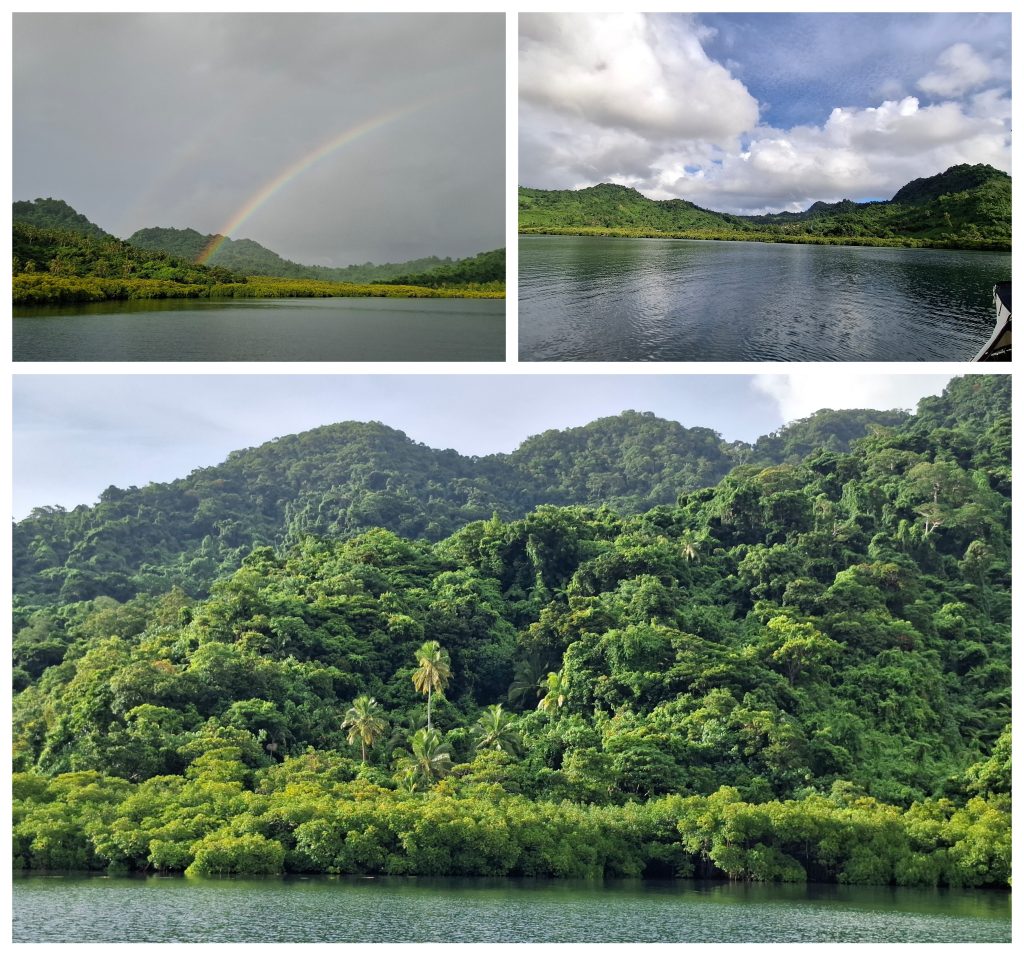
The next morning we crossed over to the volcanic island Qamea, in Fiji’s Northern Division. Characterised by lush vegetation and high hills, this island doesn’t have any public roads. Six small settlements are connected by a footpath or otherwise can be reached by boat.
We found a nice Anchorage in front of the village of Naiviivi. Shortly after we got nicely dressed. Craig wearing his “sulu“, which is a kilt-like wrap-around garment and a shirt whereas I wore my blue long linen skirt and a long shirt for the occasion. We brought some “yagona” (kava root nicely wrapped up) to hand over to the Chief of the village for the traditional “Sevusevu” ceremony.
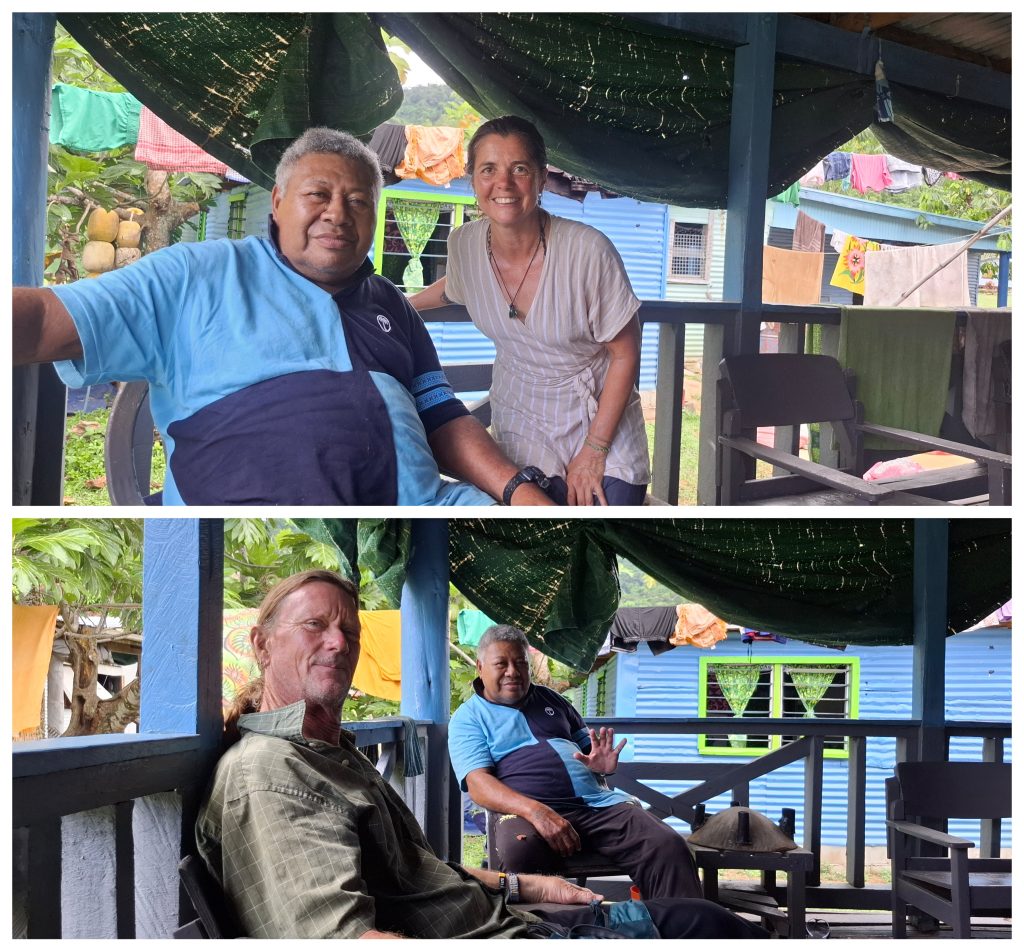
By offering this bundle of “waka” (root), you request for permission to anchor and visit the place. Chief “Joe” (Joseph Tikasalomono) seemed a very kind and calm man. We sat with him for a while, he spoke some words, almost like a prayer and told us that we were now part of the community. We could freely move around visiting the villages, and we were allowed to fish. He would make sure we could get some coconut or fruit.
Vatusogosogo
Fijian Village time
The next morning Craig went fishing. Unfortunately he didn’t catch a fish, but became friendly with Bill, a fisherman. They agreed on going together a bit later in the afternoon. Not knowing yet, that this time Craig would successfully come back with a Scat fish which he caught with his bare hands!
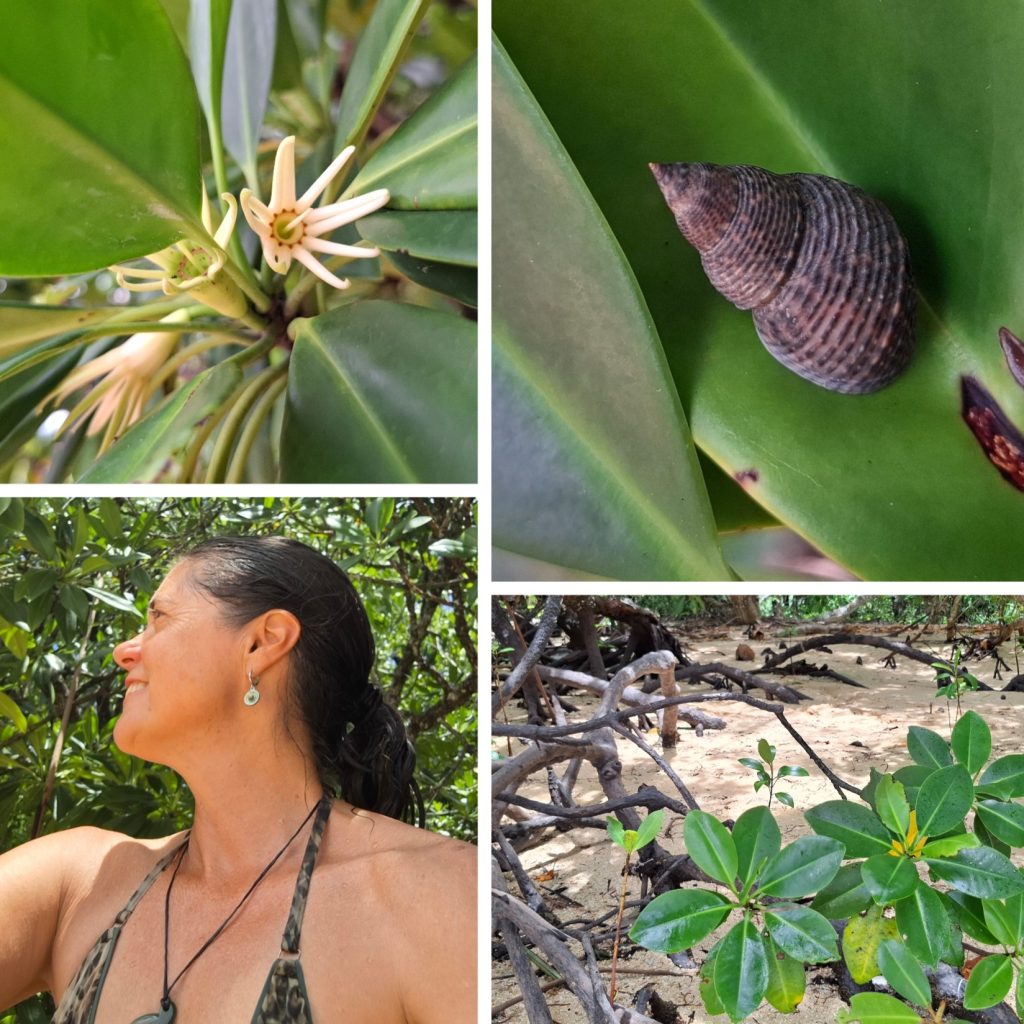
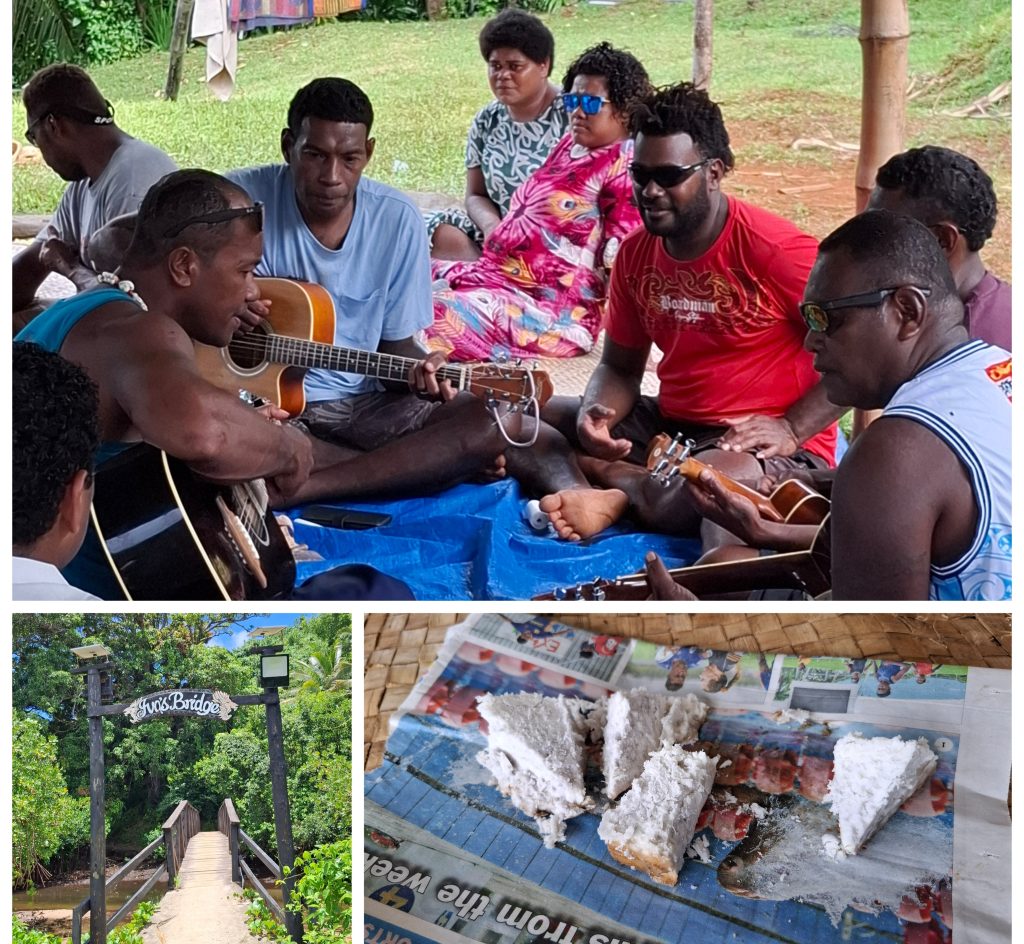
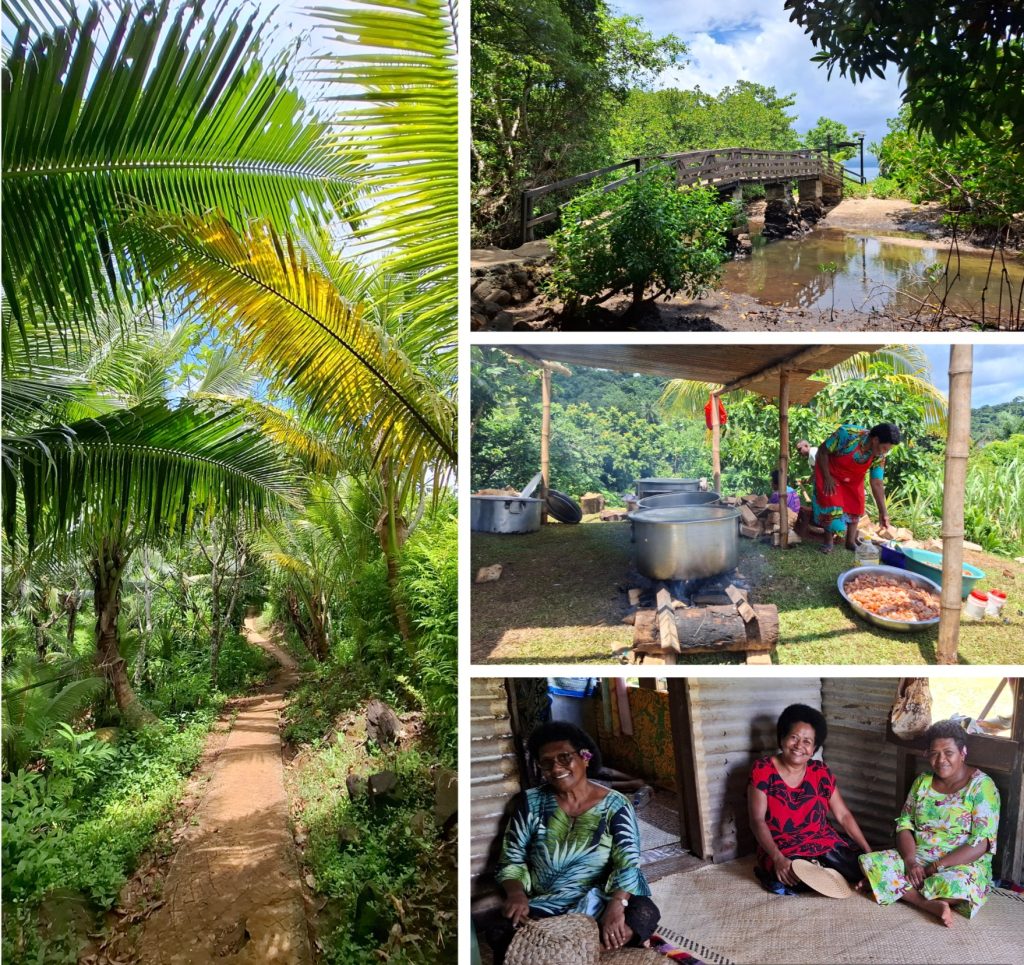
Meanwhile I took the paddleboard to paddle along and explore the mangroves. There were fishermen boats all over the place. After checking out several spots I decided to stop at the beach and crossed “Ivo’s Bridge” to reach a lovely looking village build upon a hill. I was welcomed heartly by the men who were garthering together in a covered open space. Shady and with a bit of a welcoming breeze, I gladly sat with them accepted some “kava” and guava.
I was the only woman but they insisted that it was more than fine. After a while two Fijian came along with another foreigner, Raul from Brasil. They told us that a funeral would be held the next day, as Mosessi a well-respected 71-years old diver of one of the villages had died of a heart attack. We were more than welcome to join the ceremony.
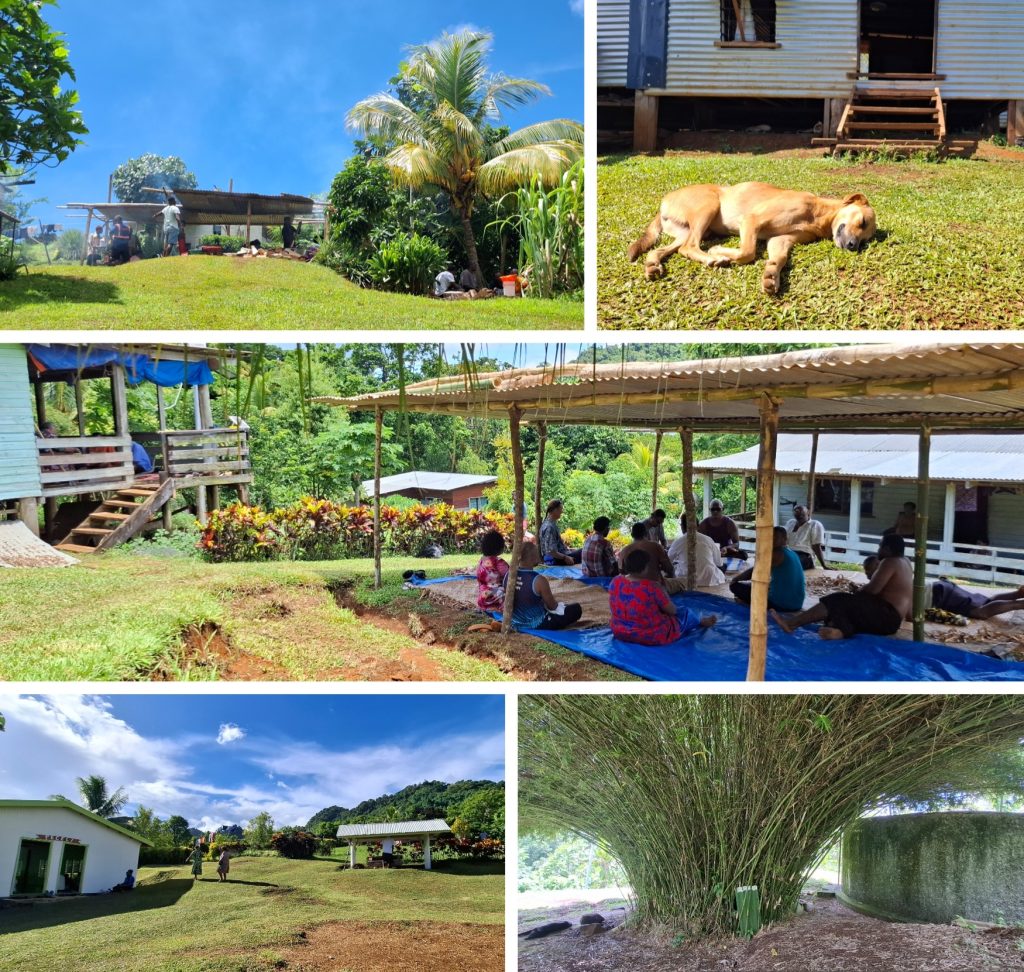
After a while I felt I wanted to get to know the women, so I thanked the men for their hospitality and continued going further up hill. There were dogs, and pigs amongst young children who were happily playing around greeting me with “Bula, bula!” Soon I reached a house full of women. One lovely lady welcomed me warmly and introduced herself as Puanatou. She is a mid-wife and healer and kindly showed me around, while introducing me to more women.
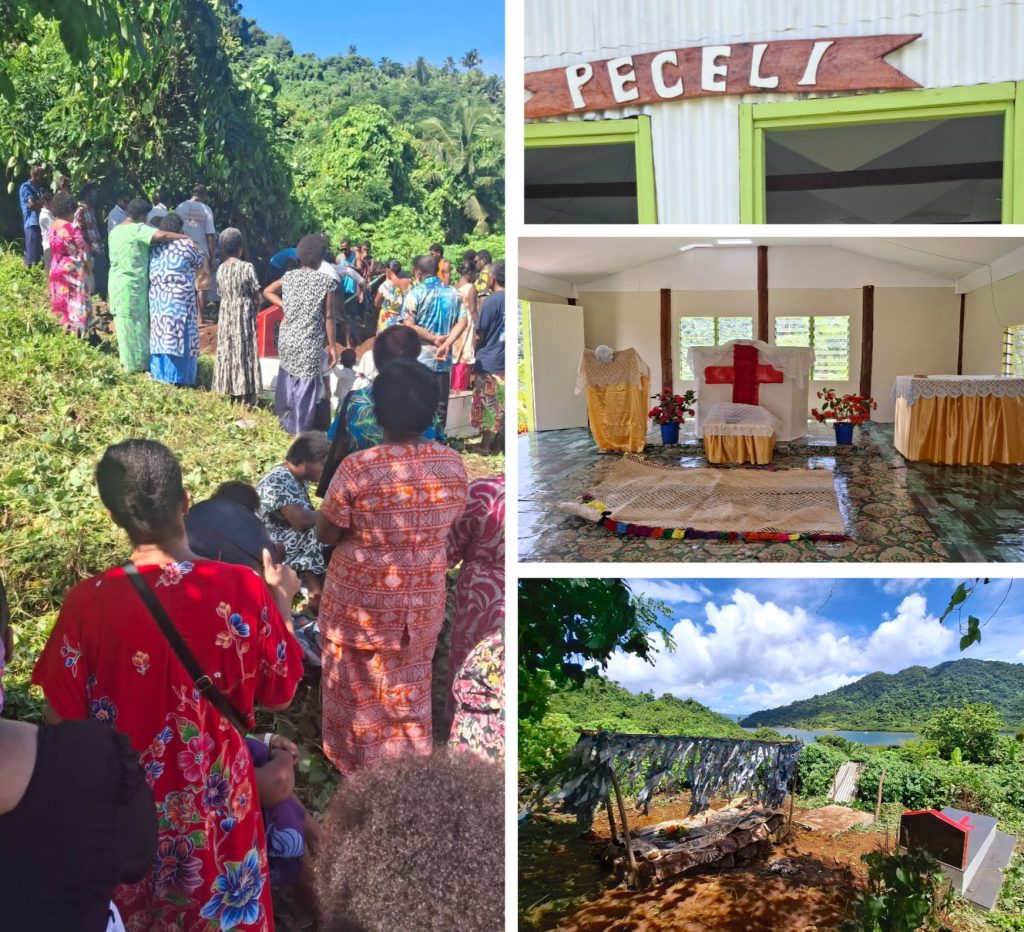
Proudly she showed me their Methodist Church “Peceli” which she was decorating for the funeral. At noon she was also in charge of the “Lali” drum. This is a typical Fijian drum (long piece of wood), which is used to call people together, but also to remind them that it’s time to pray. She explained me that the Lali was used at 7 a.m., noon and 5 p.m. Once she had played the drum, the next village would do so and so on and on. This way the whole Island could say Grace.
It was running late and I felt the urge to go back to the boat as I had no phone with my. I was gifted with a sweet papaya and promised to come back for the funeral the next day. Befor leaving Puanatou showed me the cementry with to most magical view over the bay.
God’s time, is the best time
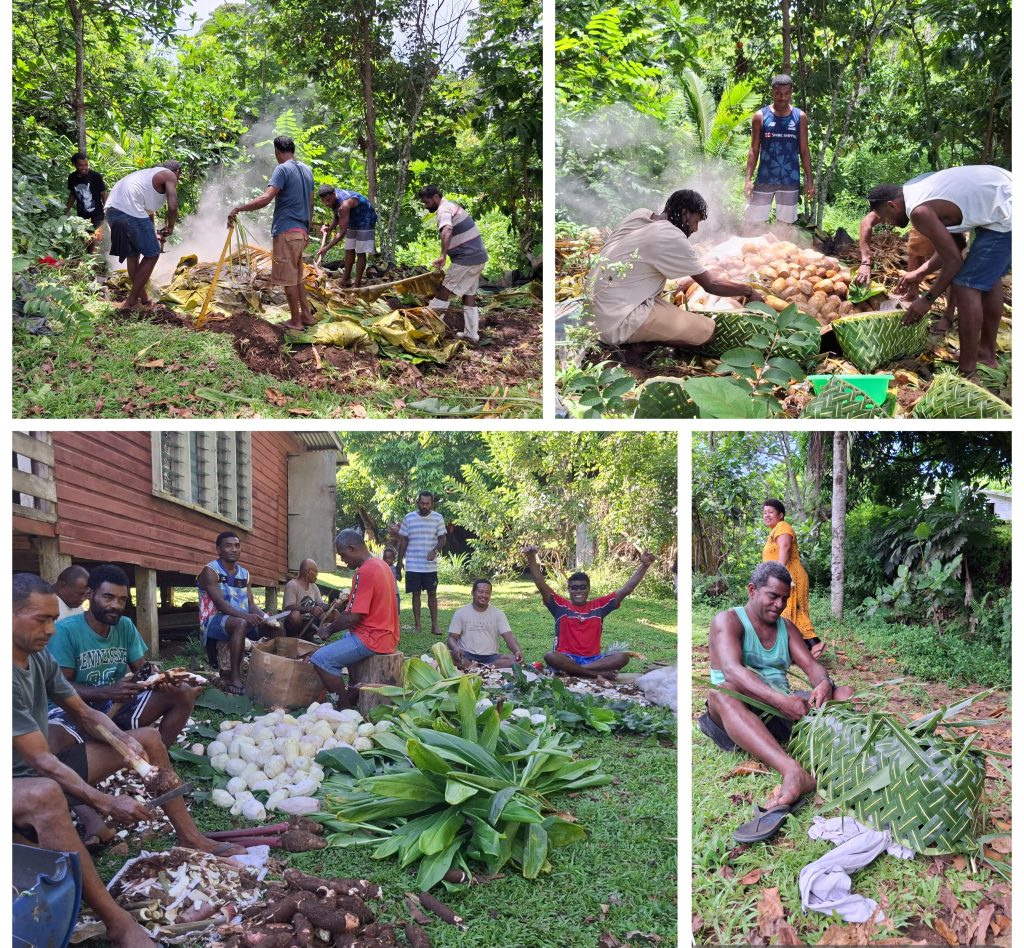
The next morning we got properly dressed for the funeral at 8 a.m. When we arrived the men were all busy preparing “lovo” a traditional Fijian earth oven feast. The “cassavo” and “dalo” (both rooth crops) were wrapped in taro and banana leaves and slow-cooked over hot stones. They were cheerfully chatting along. Some were playing music and everybody seemed to have a job.
We continued passing the house of Mosessi’s family where the coffin bearers were getting ready. Puanatou greeted us and accompanied us to the church, where she pointed out to sit right next to her. More and more villagers entered and the coffin was brought in. The priest seemed a devoted man. Puanatou’s husband followed by Mosessi’s eldest son spoke some emotional words. At some point they started chanting. It was deafening. They all song their hearts out, very touching.
Although we could not understand a word, we sure got a good impression about what a respected man Mosessi must have been. The priest mentioned only one sentence in English. I am not sure why… but that sentence got stuck in my head. It seemed very comforting when he said: “God’s time, is the best time”.
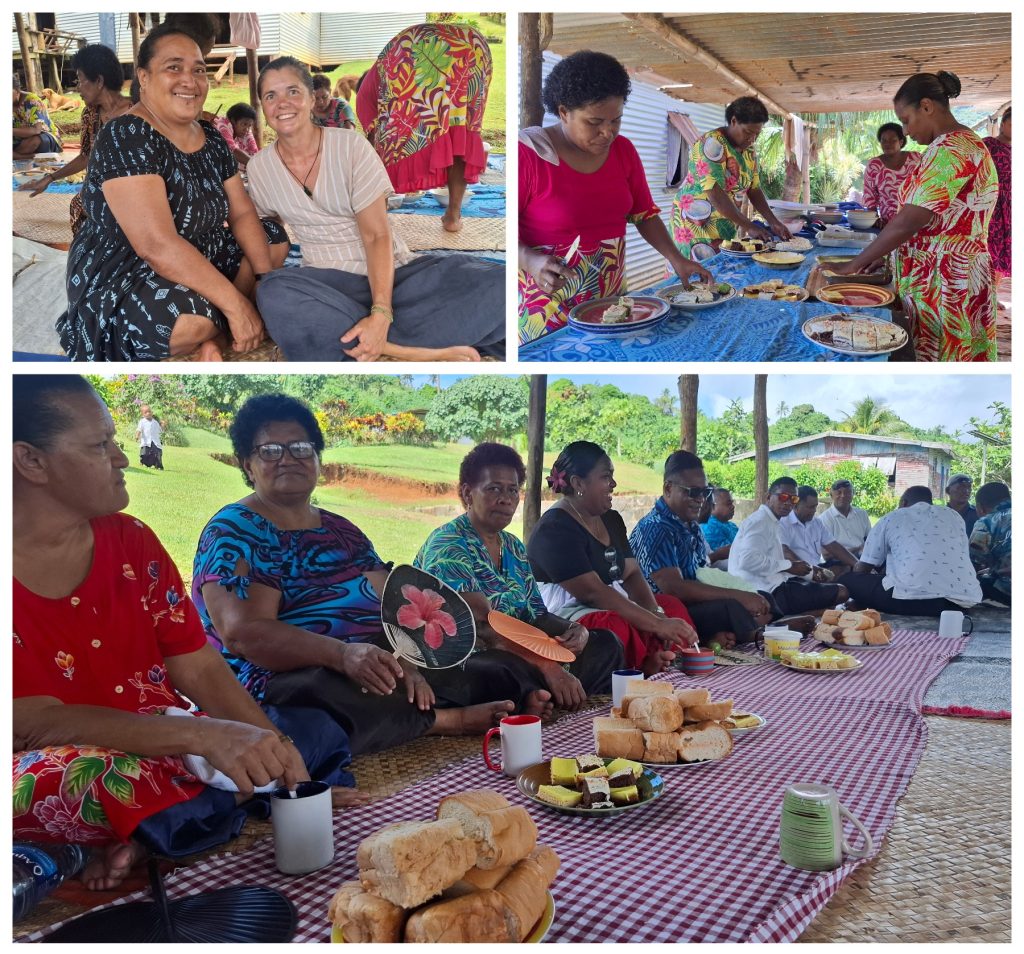
Once the ceremony came to an end, the coffin was carried uphill to the cementery. Craig went with the crowd, whereas I decided to help Puanatou, Anna, Vivian, Clare and more women to set the table. There was cake, bread with tomato spread, and tea. It was a real feast. People from near and afar and family members would stay in different houses of the village. Every house would host some people. A true community, where people stick together if needed.
There was “kava” and some were smoking “suki“. I got invited in the house of the widow to sit with them for a cup of tea. More food was served in the afternoon. A pig had been prepared for the occasion, there was fish in coconut lolo, chicken with carrots, noodles, rice and vegetables. It felt very special to be part of this long, emotional but festive day.
Waibulu
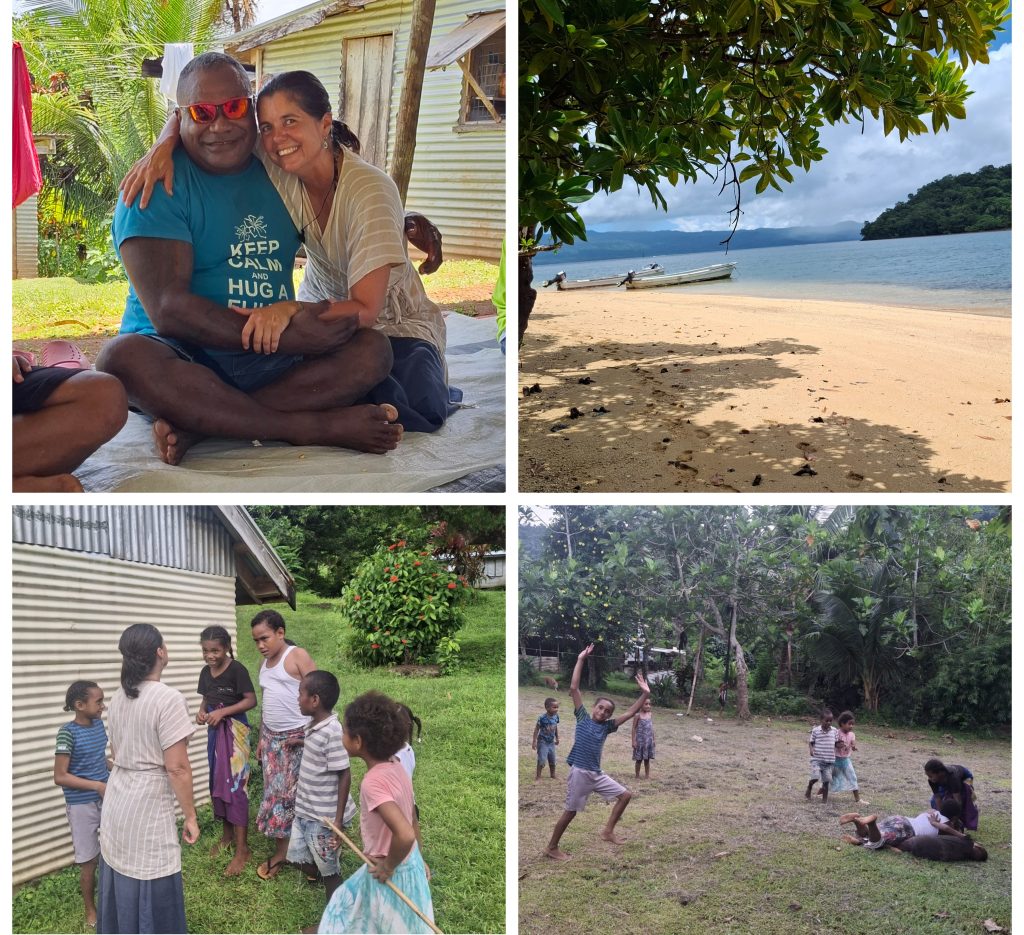
To be able to digest all the food, we decided to go far a walk to the next village. It was good to see people along the way, we knew due to the ceremony. At some point we walked for a while with Puanatou’s daughter in law. Waibulu is a small unspoiled settlement blessed with many children. After the usual “Bula, bula” greeting I asked them if they could teach me a Fijian song.
They were thrilled to do so. While showing us the church we started singing. It was hilarious. I tried so hard, but my pronunciation failed more than once. We had such a good laugh though! Fijan songs were followed by some English lyrics now. We sang “Row, row, row your boat” and some very religious orientated songs “Pray every day” before going to the Rugby playground to enjoy a match.
Dusk was starting to set in, so we said goodbye and made ourselves on our way back. At the last house, we were greeted by Taniela. Earlier that day he wore a T-Shirt “Keep calm – Hug a Fijian“, which I certainly did! Now he was preparing a pig shed with a friend and made some time to chat with us. He could not let us leave without giving us a pineapple and some bananas!
I am very Grateful for the kindness and generosity of the people of Qamea – Vinaka vakalevu!