Chengdu (Sichuan)
Chengdu is the capital of Sichuan Province in southwestern China. With a population of more than 20 million people in its wider metropolitan area, it is one of China’s largest and fastest-growing cities.
Atom, my fellow-student from Tianmeng Kung Fu school, had given me the contact of Huqin, a lovely Chinese woman he had met in his hostel in Lijang. When I contacted her, she offered me her apartment to stay in and to be our guide for the three days we would be in Chengdu. All for free! Without knowing me, her generosity went beyond anything I could have imagined.
So when we arrive in Chengdu, we take the Didi taxi to her apartment, where she welcomes us with her whole family, 24 eggs, a bag of oats and a box of sweets! The people of China keep surprising me!
Pengzhen
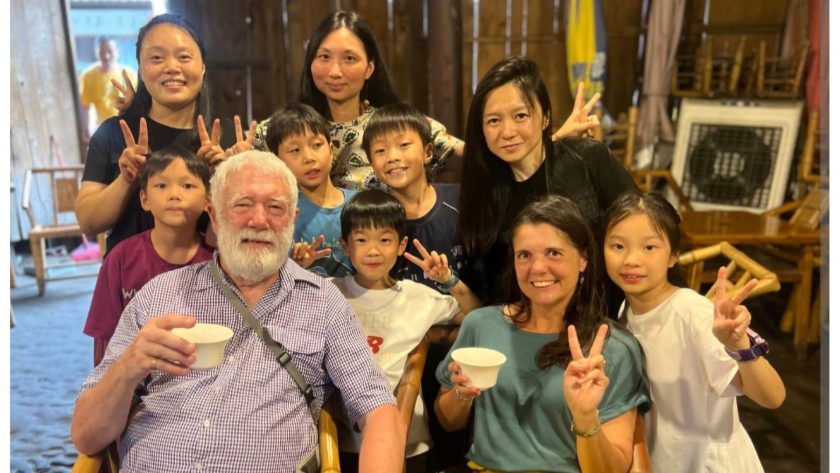
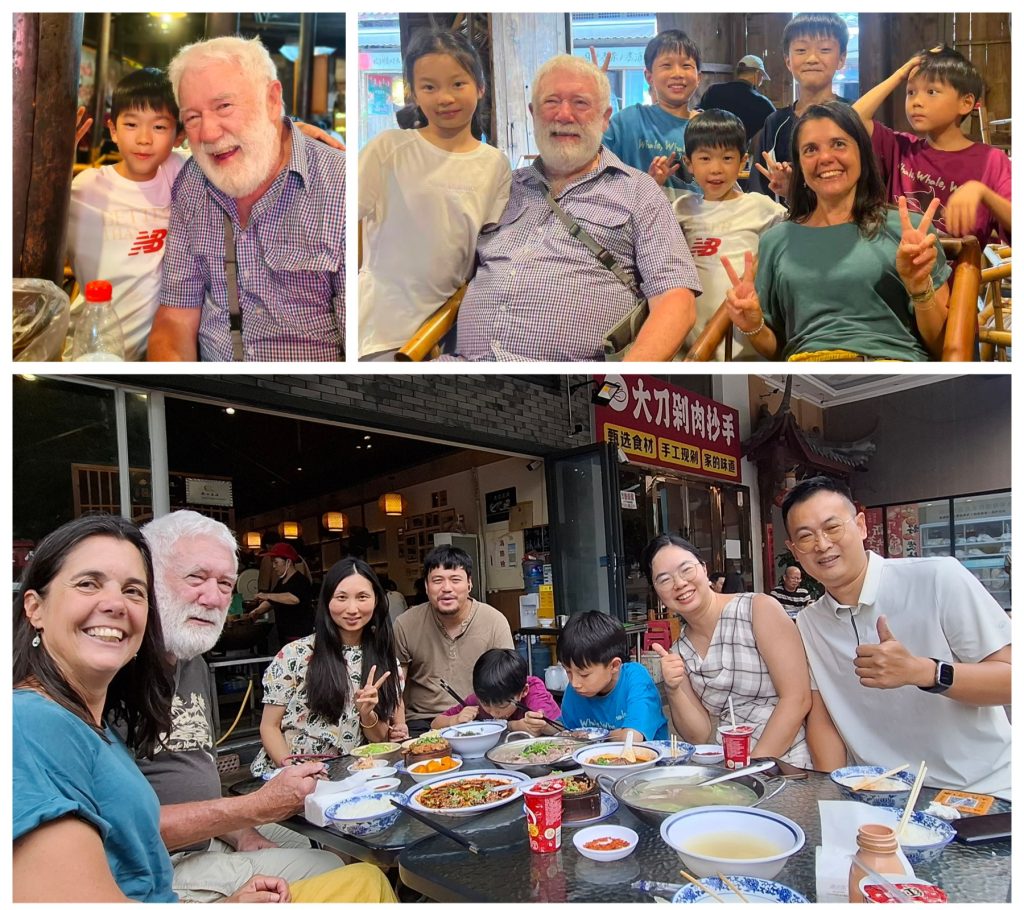
After a lovely lunch with Huqin, her husband, two boys and some neighbours, they decide to take us to a famous and atmospheric Old Teahouse in Pengzhen, just outside Chengdu. Two of Huqin’s best friends Yanzi and Yang ke Jia, come along with their children too. Our family increases every minute!
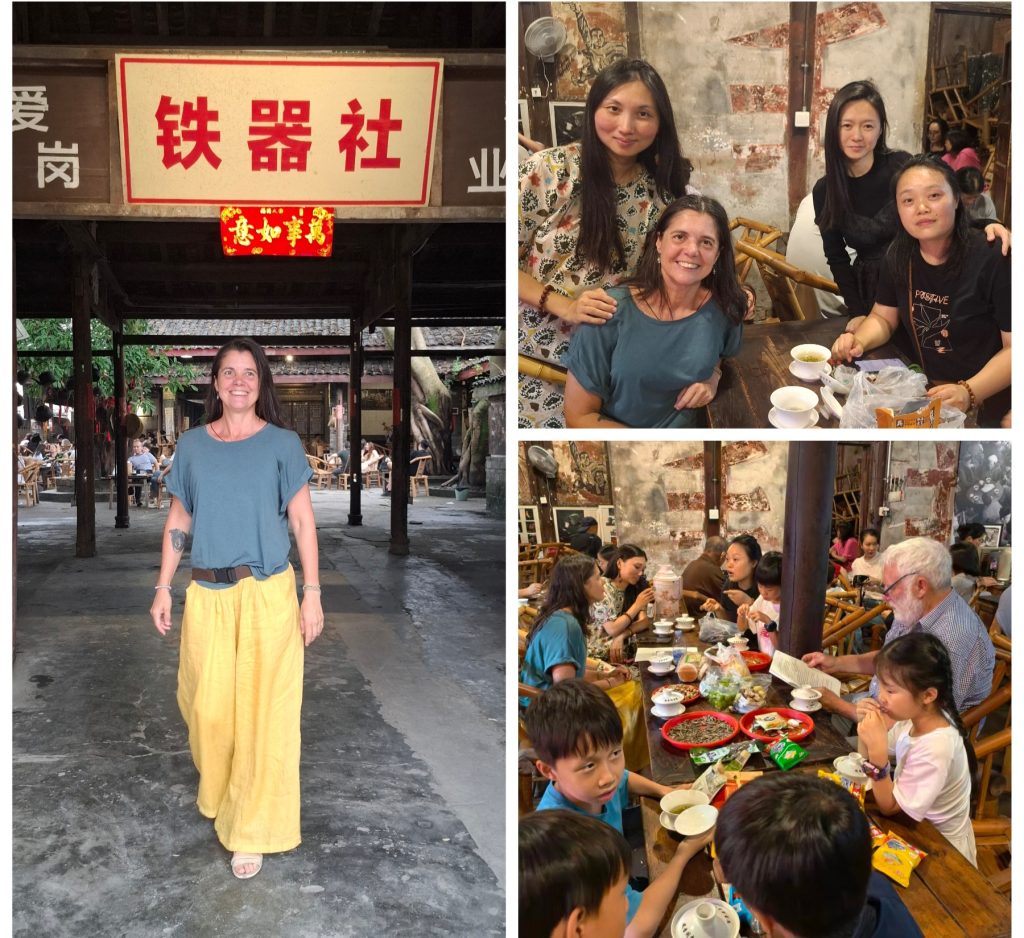
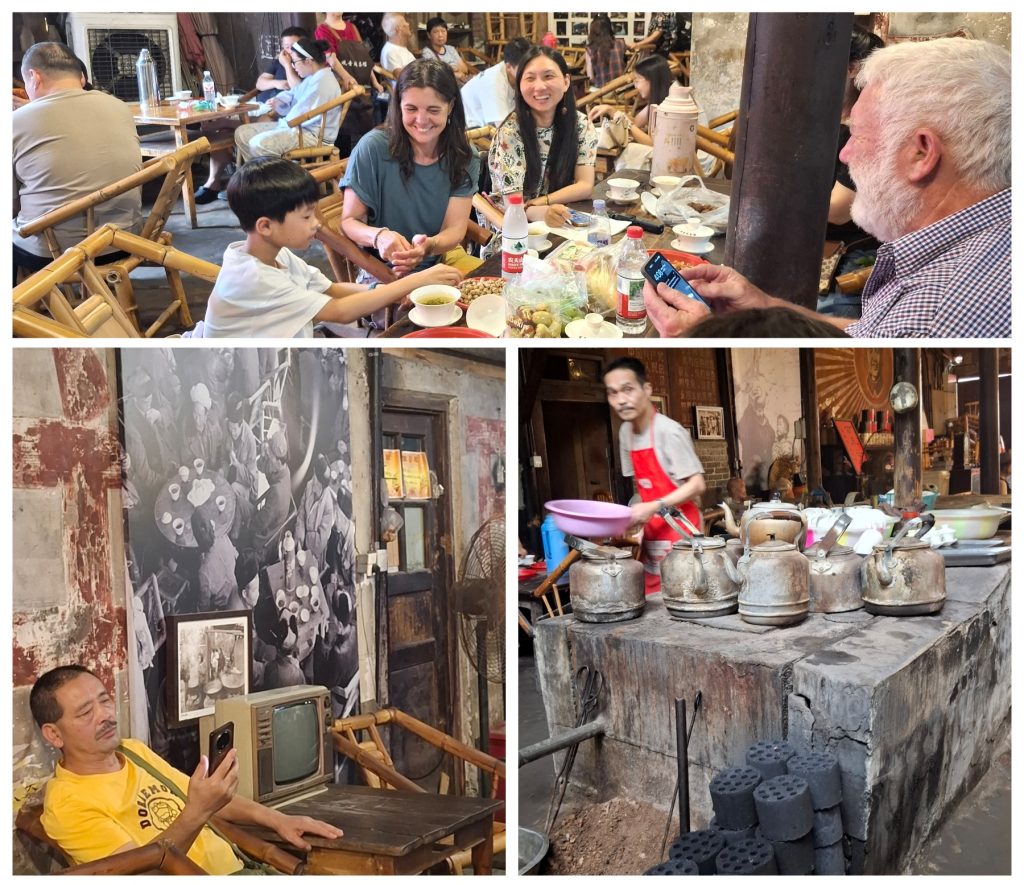
Entering in the Old Teahouse feels like a step back in time, with its old wooden structure, worn furniture, traditional bamboo chairs and smoky stove. Local people come to drink jasmine tea, chat, play cards and simply spend time together.
It’s packed, but Huqin’s husband manages to find us a large table for the eleven of us. Yanzi puts bags of peanuts, apples and other delicacies on the table. Huqin starts serving us tea, and the children are thrilled to get to know us. Everybody keeps putting more food on the table. I am surprised, but it seems like the most normal thing to do. You just bring your own food in. Unimaginable back home!
Qiqiao Day – Chinese Valentines Day
It becomes even more special, when Huqin tells us that today is: Qiqiao Day – the Chinese version of the Western Valentine’s Day. Both days are very different, though. “Qixi Festival” is a traditional Chinese festival connected with love, romance and the celebration of women’s skills and ingenuity.
The festival is based on the romantic legend of Niulang (the Cowherd) and Zhinu (the Weaver Girl). They were deeply in love but separated by the Milky Way, represented in the story as a heavenly river. Once a year, on the seventh night of the seventh lunar month, magpies form a bridge across the river so the lovers can meet.
I don’t know much about this legend…. but what I do know is that I am surrounded by LOVE. There is so much kindness and generosity around this table: three nationalities, three generations… in the Dutch language we have a saying “all good things come in threes“. Today, that’s undoubtedly happening!
Number plates in Chengdu
Huqin suprises us over the next few days with the variety of cars she uses to show us around! When I ask her about it, she explains that the blue number plates are for petrol cars, whereas the green number plates are electric cars. The blue ones are restricted for one day a week. For example, if your number plate ends with the number 3 or 8, you are not allowed to drive your car on Wednesdays. So interesting!
Panda Valley (Dujiangyan)
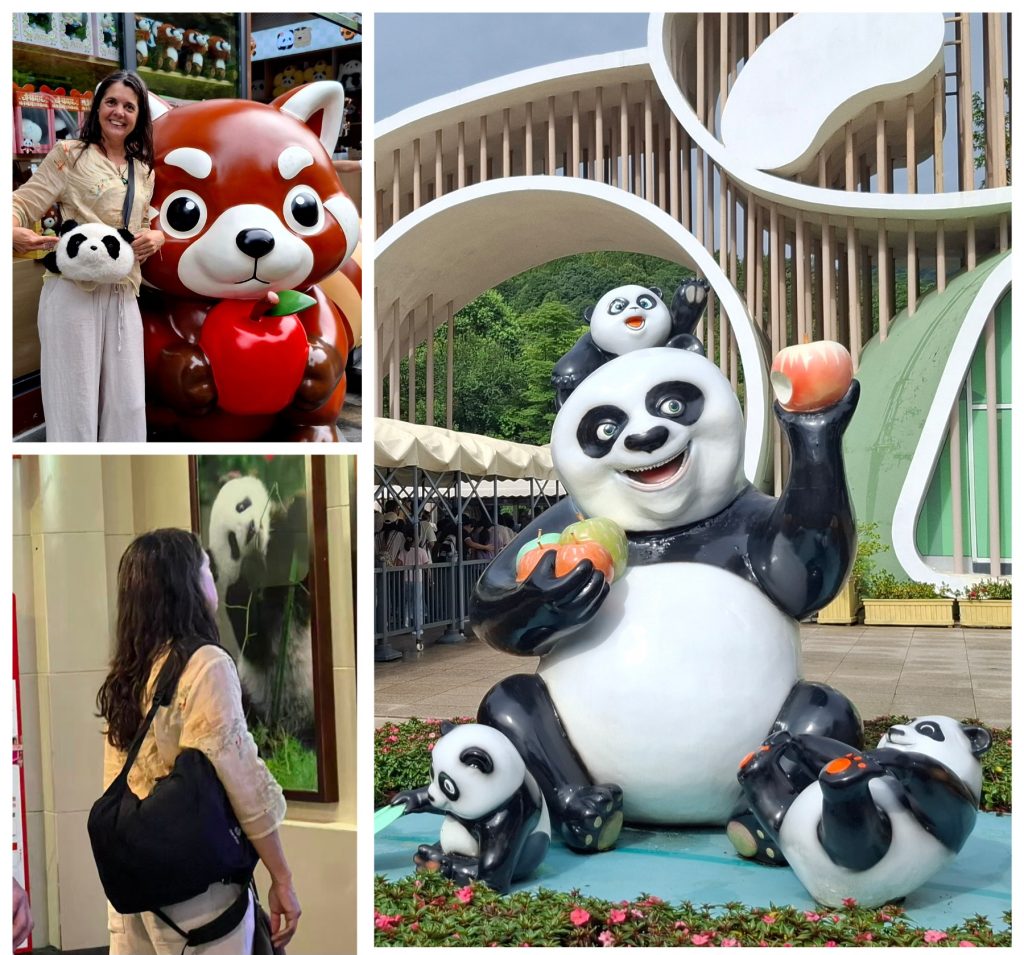
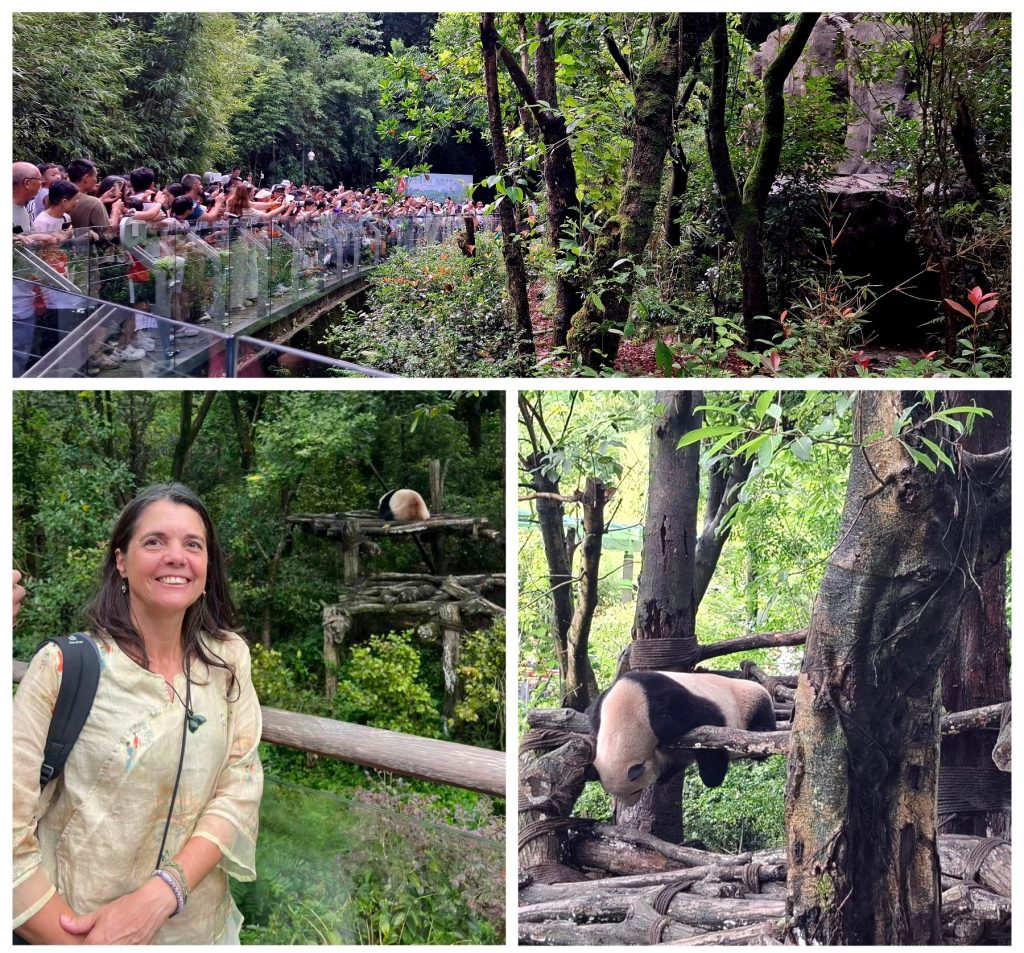
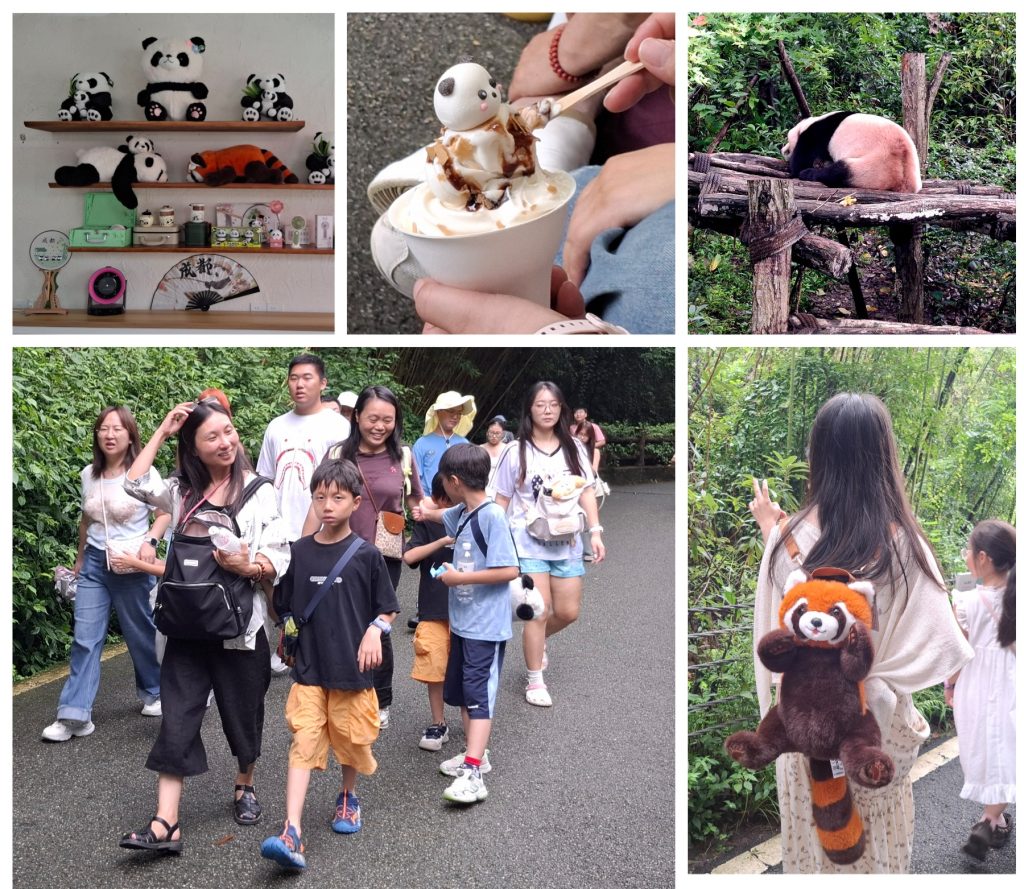
The next day, Huqin takes us, together with her two sons and Yanzi with her son “Harry” to Chengdu Panda Breeding Research Center Dujiangyan, commonly known as Panda Valley. It’s a long drive, since it’s located about 50 km from Chengdu.
Opened to the public in 2015, Pandy Valley is set in a natural, forested environment designed to resemble the pandas’ wild habitat. Besides Giant Pandas, it is also home to red pandas and other wildlife.
We arrive early, but it is already getting crowded. Since zoos tend to make me feel sad, I am not sure if I will like this, although I do feel thrilled to see the endangered Giant Pandas! Soon, my second thoughts are confirmed. This is far from a “natural environment” for the pandas.
The crowd gathers around the platforms, where the pandas are hanging around, trying to get some rest under the heat of the sun and high humidity. This doesn’t feel right. How can we humans create a so-called “natural” environment like this for the pandas, I wonder?
I am grateful for the effort Huqin is making to show us the pandas and happy with the company. But to me… it seems not ideal to make the pandas breeding.
Dujiangyan Scenic Area
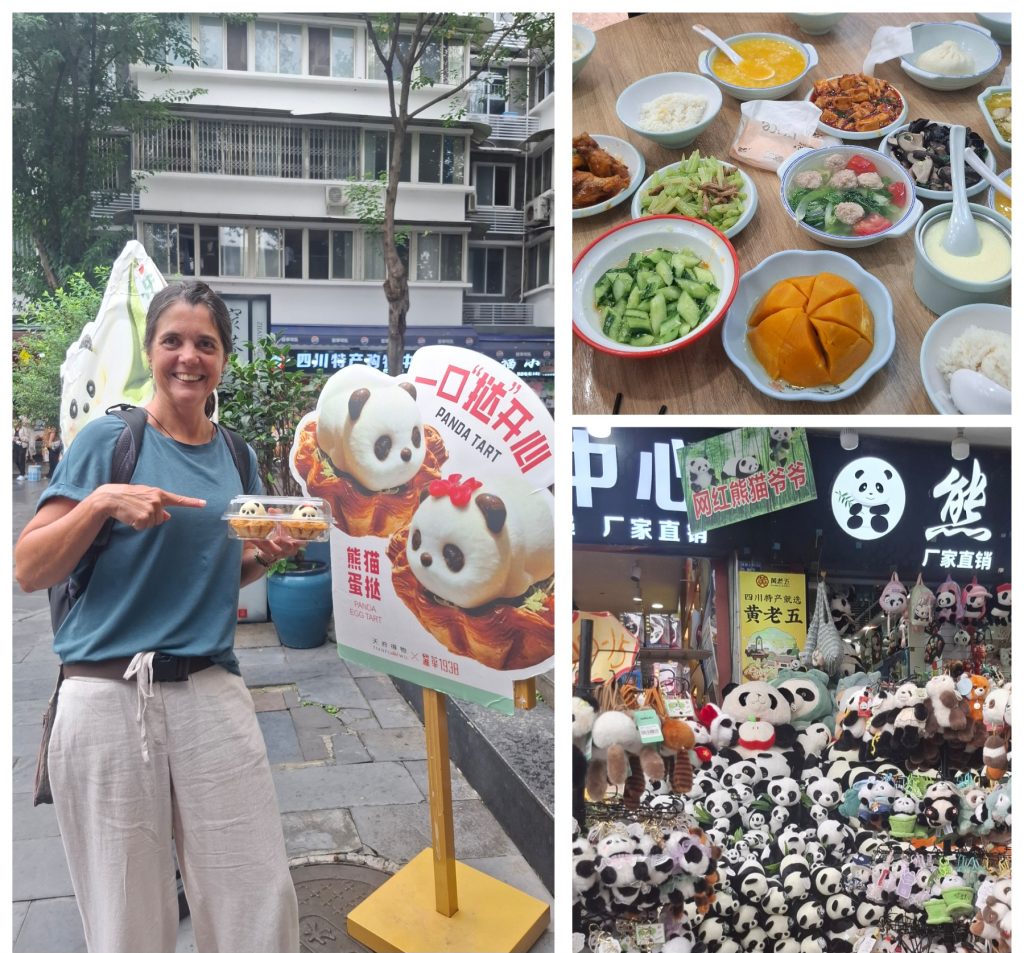
After Panda Valley, we drive to Dujiangyan Scenic Area near the Dam. Dave and I are already tired, and the children are hungry. Yanzi and Huqin quickly find a great restaurant where we share, once again, a wonderful meal together. They order a wide variety of local dishes to make sure we get to taste them all!
So thoughtful! There’s not more precious than sharing a meal together!
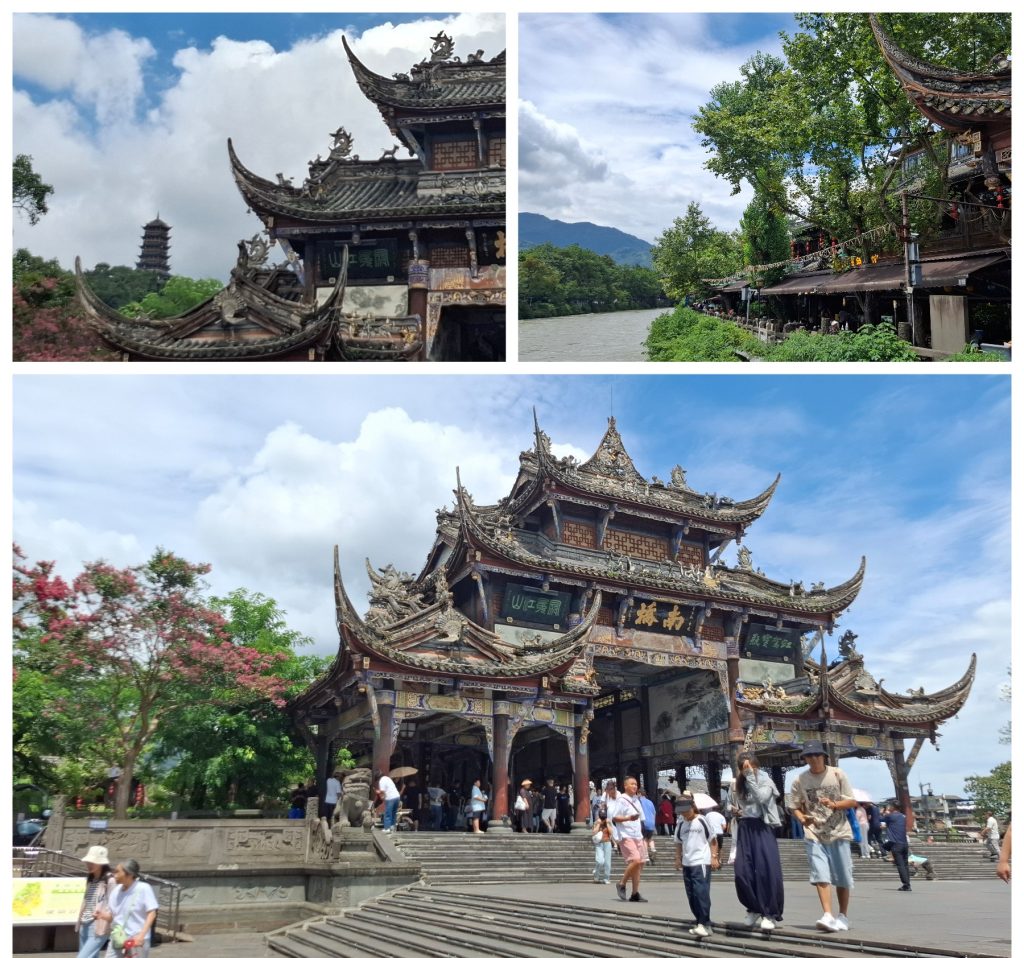
After lunch, we linger around the impressive wooden bridge, with a majestic Pagoda in the background. The original idea is to get up there to enjoy the view over the dam and irrigation system, together with nearby Mount Qingcheng, both declared a UNESCO World Heritage Site in 2000. But we are too tired, the heat is taking its toll. So we are happy to call it a day!
Qingyang Palace
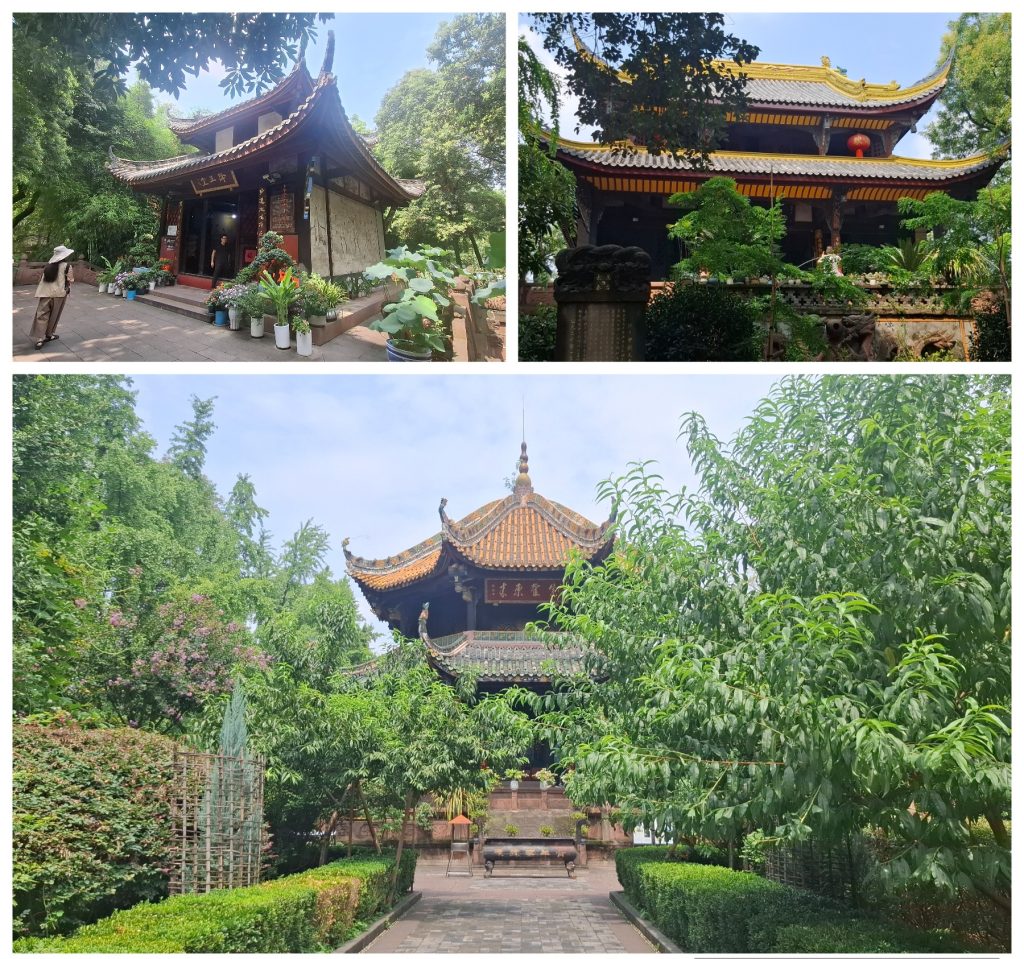
The next day, Huqin and Yanzi pick us up to visit the Qingyang Palace, also known as the Green Ram Palace. It is one of Chengdu’s most important Taoist temples and is often described as the oldest and largest Taoist temple in Chengdu.
Yang ke Jia joins us with her son and daughter a little later. It is good to see her again too! We spend a lovely day all together and feel blessed to be with our new Chinese family.
Sitting in the shade of an ancient tree by the end of the day, we share our thoughts about life, our daily struggles and insecurities. It becomes a very emotional moment when we express how grateful we are to have each other in our lives.
That’s what travelling and life in general are all about to me – sharing love, kindness and gratitude!
THANKS for this magical moment!