The Terracotta Warriors in Xi’an
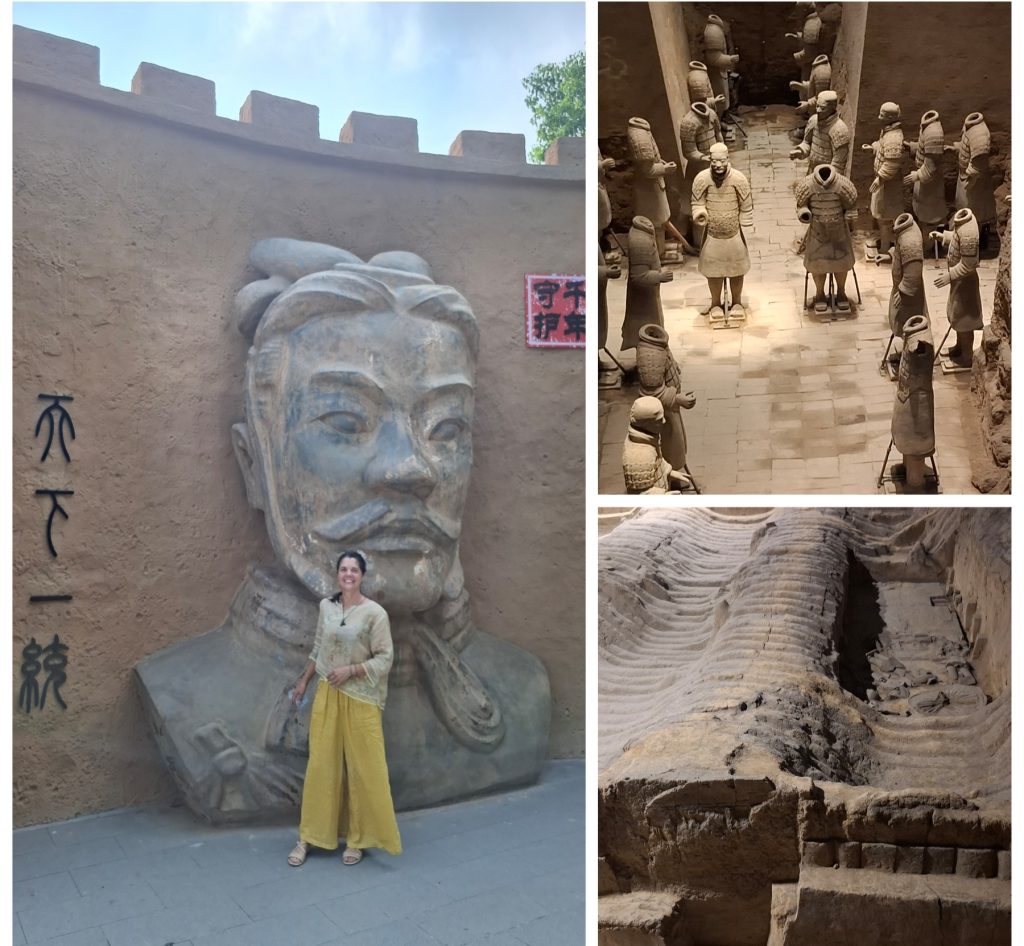
One of the most impressive UNESCO World heritage sites is the Terracotta Warriors at Xi’an at the Emperor Qinshihuang’s Mausoleum Site Museum, about 40 kilometres away from the city centre.
According to our guide, it’s even one of the Seven Wonders of the world …. I am afraid that’s his wishful thinking only. But, the truth is, the Terracotta Army is popularly called the “eighth wonder of the world“!
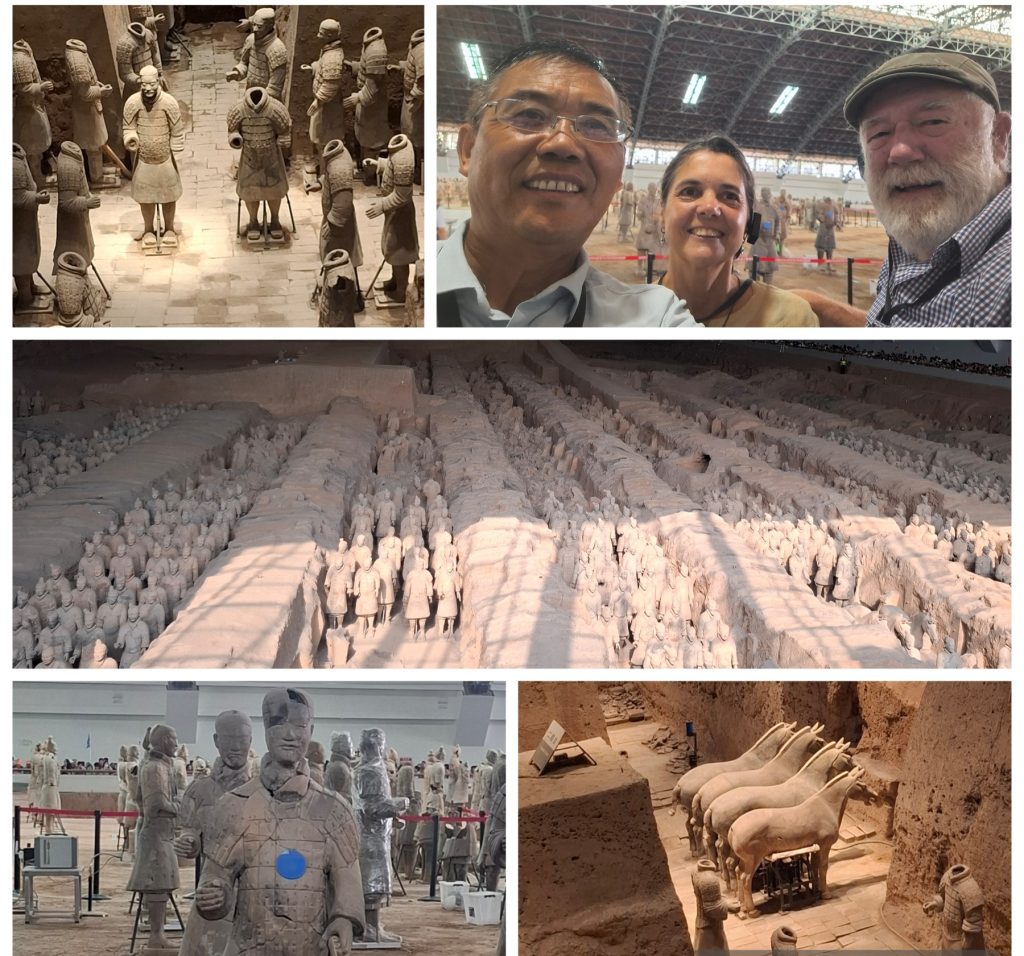
Just yesterday, I decided to book a private tour, which makes travelling easier for Dave. At 7.40 a.m. our driver picks us up and we drive for over an hour to reach this well-known archaeological site. Our guide Louis, awaits us already. He hands us two audio headsets and explains what our morning will look like. Soon afterwards, we are already queuing.
The queue isn’t too long and in no time we are entering the Mausoleum Museum complex. It’s all very well organised and this time the amount of people seems far lower than at the Panda Valley. Louis is guiding us through in a calm and very professional way. The pace is perfect and I instantly feel relaxed, even though I am not fond of crowds.
Pit 1 – Pit 3 – Pit 2
We start with Pit 1. The most impressive one of all – our mission, according to Louis, is to find a spot right at the front. Soon we manage to get there and take some photos. Taking it all in, surrounded by hundreds of other people, isn’t easy. For a moment I close my eyes.
I can smell the earth, the soil, and the history.
When I open my eyes again, staring at the thousands of warriors, I feel touched and grateful that I am here to experience it all.
Turning around, we head back to the entrance against the crowd. From the outside we pass the building to head to the other end, where we now enter through the “exit”.
We are close to the warriors, ready to be restored. Again, Louis makes sure that we have the best spot to take some photographs. It was undoubtedly a great idea to hire a guide today! He is very good at his job.
Next thing, we are heading to Pit 3. This pit is much smaller, traditionally interpreted as the army’s command centre. As it is still early, we can easily walk around and take it all in. The horses are impressive and the uniforms of the terracotta figures vary more here.
Louis carefully explains where the entrance was and the role of each warrior and commander. History comes to life!
Once more, I wish my dad was here with me today. Sharing history with him is always a blessing. I remember the words of my mum… how very much she enjoyed visiting this special place with her partner during their trip to China – years ago.
Today… in a certain way – I am here with my family. How wonderful!
We continue to Pit 2, again smaller than Pit 1 but with a greater variety of soldiers, including archers and cavalry. We can see how the wooden roof, rotted away over time, has fallen and damaged many of the terracotta figures. I admire the meticulous work of the archaeologists. What strikes me most is the incredible patience and precision they must work with.
Every fragment of clay matters, and some figures have to be painstakingly reconstructed from hundreds of broken pieces! Louis tells us that nowadays they use the same method of baking the clay figures at 950 – 1050 degrees – as they did back in the days.
Exhibition Hall
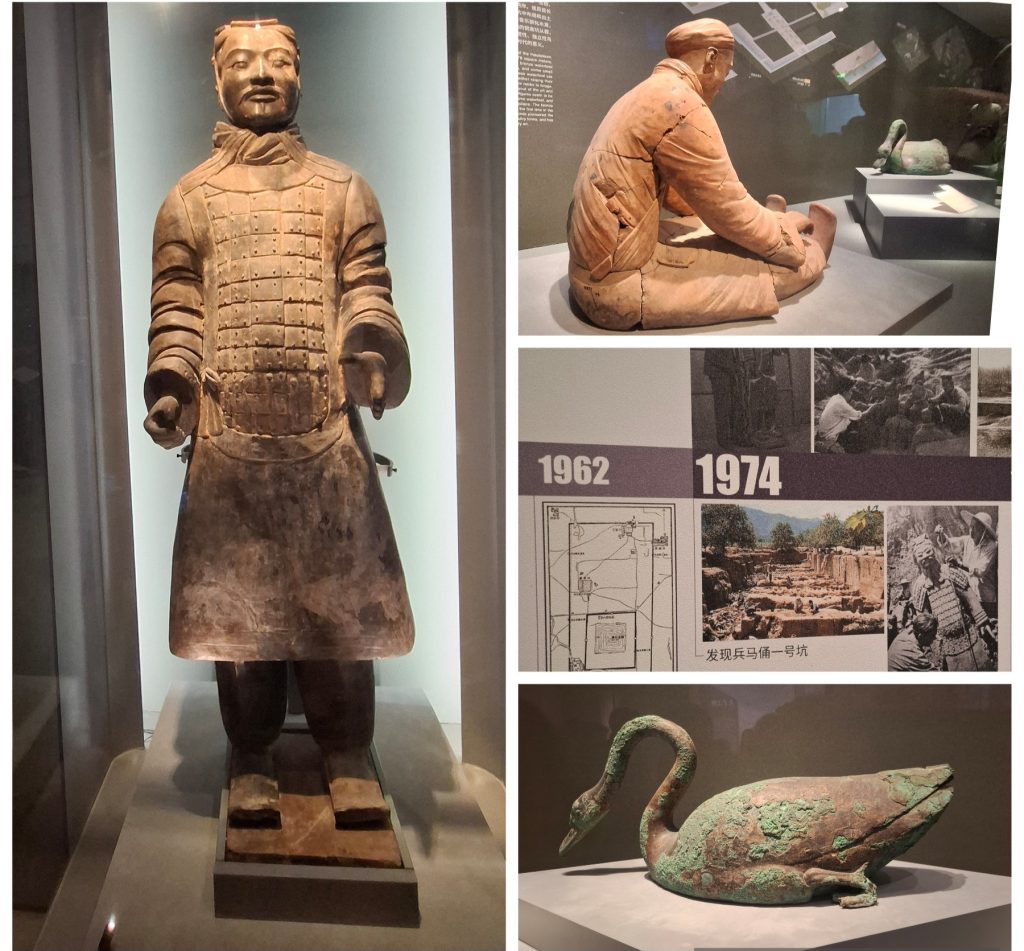
Finally we reach the Exhibition Hall. Louis takes us aside and guides us to a wall full of explanations. He patiently goes through each figure to make sure we have a good understanding of them before we explore the hall by ourselves. So helpful!
We pay a quick visit to the official Museum Shop. A lovely woman, who has worked here for over thirty years, shows us some figures. We don’t want to buy anything, but enjoy walking around.
Overwhelmed but satisfied we leave this must-see site around noon.